Gambling is one of humanity’s oldest pastimes. Long before the flashing lights of Las Vegas, long before the first card was dealt in a Venetian casino, and centuries before a single line of code produced the world’s first online slot — people were wagering on uncertain outcomes. They bet on dice carved from bone, on chariot races in crowded arenas, on the turn of a tile in candlelit rooms. The urge to risk something of value on a chance outcome appears to be hardwired into human nature itself.
This is the story of how gambling evolved over 4,000 years — from clay tablets in ancient China to the smartphone in your pocket.
Table Of Contents
1. The Earliest Evidence of Gambling — 2300 BC and Beyond
The oldest known gambling artifacts were discovered in China and date back to approximately 2300 BC — a set of tiles believed to have been used in a rudimentary game of chance. While historians debate the exact nature of the game, the existence of these tiles confirms that organised wagering activity predates written history as we know it.
But China is far from the only ancient culture to leave gambling fingerprints behind.
In Mesopotamia, archaeologists uncovered six-sided dice made from sheep bones (called astragali) dating back to 3000 BC. These weren’t novelties — they were used in games across the ancient Near East, Egypt, and the Indian subcontinent. The concept of assigning numerical value to a random outcome and betting on it appears independently across cultures that had no contact with one another, which tells us something profound: gambling isn’t a cultural invention. It’s a human instinct.
In ancient India, gambling holds a place of remarkable cultural significance. The Rigveda — one of the oldest known texts in any language, dating to around 1500 BC — contains a poem called the “Gambler’s Lament,” in which a man describes losing his wife, family, and wealth at dice. The Mahabharata, one of India’s two great epics, features a fateful gambling scene so central to the narrative that it triggers a war. Dice made from the nuts of the Vibhitaka tree were the instrument of ruin for the Pandavas — a story that has echoed through Indian culture for millennia.
In ancient Egypt, gambling scenes appear in tomb paintings, and loaded dice — designed to land on favourable numbers — have been found in archaeological digs, suggesting that cheating at gambling is also an ancient human tradition.
The first written rules for any game resembling gambling are believed to be Chinese, describing an early form of keno-style lottery used to fund state construction projects — quite possibly including portions of the Great Wall. The idea of taxing gambling to fund public works, it turns out, is not a modern invention.
What unites all of these ancient cultures is a shared understanding: that chance can be quantified, that outcomes can be predicted with probability, and that this uncertainty has value. That insight is the foundation of every casino, every betting exchange, and every online sportsbook that exists today.
2. Ancient Rome and Greece — When Gambling Was Part of Life (and Law)
If ancient China and Mesopotamia planted the seeds of gambling culture, Ancient Greece and Rome grew them into something that would be recognisable to a modern reader.
Ancient Greece was a gambling society. Greeks bet on the outcomes of the Olympic Games, on chariot races, on animal fights, and on dice games played at symposia (the philosophical drinking parties made famous by Plato and Socrates). The goddess Tyche — the deity of fortune and luck — was widely worshipped, and gambling was seen as a legitimate way to invite her favour.
The Greeks also gave us the earliest known written analysis of probability, courtesy of the mathematician Cardano centuries later, but their cultural framework for thinking about chance and fate laid the groundwork. The Trojan War itself, in mythology, was preceded by Paris gambling on the favour of Aphrodite — even the gods, it seems, couldn’t resist a wager.
Ancient Rome, however, took gambling to an entirely different level — and also gave us the world’s first known gambling legislation.
Romans gambled on everything: gladiatorial combat, chariot races at the Circus Maximus, animal fights, dice games, and board games. The Roman legions spread gambling culture across Europe as they conquered it, taking dice games and betting habits into Britain, Gaul, Germania, and the Iberian Peninsula.
Gambling was so embedded in Roman life that the Senate passed multiple laws attempting to ban or restrict it — most notably the Lex Aleatoria, which prohibited dice games except during the festival of Saturnalia (late December — the Roman equivalent of Christmas). Even the emperors couldn’t stay away. Emperor Augustus was known to gamble enthusiastically and wrote letters about his dice sessions. Claudius reportedly had his carriage specially designed with a board game surface so he could play while travelling. Nero is said to have played for stakes equivalent to hundreds of thousands of modern dollars per throw.
The Romans also gave us the phrase that captures gambling’s essential nature — alea iacta est (“the die is cast”), attributed to Julius Caesar upon crossing the Rubicon. One decision, irreversible, its outcome uncertain. That is gambling in its purest philosophical form.
By the fall of Rome in 476 AD, gambling culture had been exported across an entire continent. The centuries that followed — the Medieval period — saw the Catholic Church attempt to suppress gambling as sinful, with limited success. Cards arrived in Europe from China via the Arab world in the 14th century, instantly creating new gambling games and new problems for moralists. By the time of the Renaissance, gambling was flourishing again in every major European city.
3. The First Recognised Casino — Venice, 1638
The word “casino” comes from the Italian casa, meaning house — specifically, a small house or villa. The term originally described any small social club or public room where people gathered for entertainment.
In 1638, the Republic of Venice did something unprecedented: it opened the world’s first government-sanctioned gambling house — the Ridotto. Located in the wing of the Palazzo Dandolo near the Church of San Moisè in Venice, the Ridotto was established primarily to provide controlled gambling during the annual carnival season, keeping games organised and reducing the chaos of unsupervised street gambling.
The Ridotto was not for everyone. Entry required formal dress — a hat and mask in keeping with carnival tradition. The games on offer included basetta, birribi, and biribi, early precursors to modern card and numbers games. The house took a cut of every game — an early version of the rake and house edge that modern casinos still employ.
The Ridotto operated for over a century before being closed in 1774 by the Venetian reformer Giorgio Pisani, who argued it was corrupting the Venetian aristocracy. By then, however, the idea had spread across Europe. France developed salons de jeux; Germany established resort gambling towns; Britain had its gentlemen’s clubs where cards and dice were played for enormous stakes.
The casino concept had escaped Venice and could not be put back in the bottle.
Through the 18th and 19th centuries, gambling establishments multiplied across Europe, particularly in the spa towns of Germany and Monaco. Casino de Monte-Carlo, opened in Monaco in 1863, became the template for the grand casino experience — a lavish, theatrical space designed to make gambling feel glamorous, aspirational, and sophisticated. Its design, atmosphere, and business model would directly inspire everything that followed in Las Vegas.
Meanwhile, across the Atlantic, a different gambling culture was developing — rougher, wilder, and quintessentially American.
4. Las Vegas — How a Desert Became the Gambling Capital of the World
The American relationship with gambling is complicated by contradictions. On one hand, the nation was founded by Puritan settlers deeply opposed to games of chance. On the other, gambling was present at virtually every frontier town, riverboat, and gold rush camp from the nation’s earliest days. Poker, craps, and faro were the games of the American West — played in saloons and tents, often with violence not far behind the cards.
Throughout the 19th century, various states criminalised gambling and then legalised it and then criminalised it again. By the early 20th century, gambling was effectively illegal across most of the United States — a situation that, like Prohibition, simply drove it underground and into the hands of organised crime.
Then came Nevada.
In 1931, the state of Nevada legalised casino gambling — a Depression-era decision driven by desperate economic need. Almost simultaneously, the construction of the Hoover Dam brought thousands of workers to the Nevada desert, and a small railroad town called Las Vegas began to develop around their entertainment needs.
For the first decade, Las Vegas was a modest operation — a few downtown casinos with low ceilings, cheap buffets, and sawdust on the floors. Then came the vision that transformed everything.
Bugsy Siegel, a New York mobster with grand ambitions, saw the desert not as a limitation but as a blank canvas. In 1946, he opened the Flamingo Hotel on what would become the Las Vegas Strip — a luxurious resort that combined a hotel, a restaurant, entertainment, and a casino under one roof. It was the Monte Carlo model transplanted to the American desert, with more neon and less decorum.
The Flamingo struggled initially (Siegel was murdered by his associates in 1947, partly over cost overruns). But the idea was sound. Through the 1950s and 1960s, the Las Vegas Strip exploded. The mob-funded casinos — the Sands, the Desert Inn, the Stardust — became the cultural centre of American entertainment. The Rat Pack performed there. Elvis performed there. Muhammad Ali fought there. Las Vegas became not just a gambling destination but a symbol of American excess, glamour, and freedom.
The 1970s and 1980s brought corporate ownership to the Strip. Howard Hughes had already started buying casinos in the late 1960s; by the 1980s, companies like Hilton, MGM, and later Steve Wynn’s Mirage Resorts had replaced the mob with boardrooms and annual reports. The casinos got bigger, more elaborate, and more profitable. The Mirage (1989), the Bellagio (1998), and the Venetian (1999) set new standards for scale and spectacle.
By 2000, Las Vegas was generating over $5 billion in annual gaming revenue. It had become the template against which all other casinos were measured.
But even as Las Vegas reached its peak, a revolution was already brewing — one that would eventually challenge the very need to travel to a physical casino at all.
5. The Birth of Online Gambling — 1994 Onwards
The internet changed everything, and gambling was one of the first industries to understand just how profoundly.
The story of online gambling begins in 1994, in the small Caribbean nation of Antigua and Barbuda. Facing economic challenges and recognising an emerging opportunity, the government passed the Free Trade and Processing Act — landmark legislation that made Antigua the world’s first jurisdiction to issue licences to online casino operators. That single piece of legislation opened the floodgates.
Also in 1994, a company called Microgaming — based on the Isle of Man — developed what is widely regarded as the world’s first true online casino software. The platform was primitive by modern standards, but it worked. It proved that real-money wagering could happen over a digital network.
In 1995, Microgaming partnered with a company called CryptoLogic to develop secure financial transaction technology for online gambling — solving the critical problem of how players could deposit and withdraw real money safely. This partnership produced the world’s first properly functional online casino.
The year 1996 was pivotal. The first real-money online casino transactions were recorded. The Kahnawake Gaming Commission — based in a Mohawk territory in Canada — began issuing licences, creating an alternative regulatory framework to Antigua. Dozens of operators rushed to establish themselves.
By 1998, online gambling revenues had surpassed $1 billion globally for the first time — an extraordinary figure for an industry that was barely three years old.
The late 1990s saw an explosion of online casinos, poker rooms, and sports betting sites. Online poker in particular found its audience rapidly. In 2003, an amateur player named Chris Moneymaker — who had qualified for the World Series of Poker Main Event through a $39 online satellite tournament — won the championship and $2.5 million. The “Moneymaker Effect” triggered a poker boom that sent millions of players online to chase their own dreams.
PartyPoker, PokerStars, and Full Tilt Poker became household names. Online poker rooms were generating billions in rake. A new generation of young, mathematically literate players — who had learned the game online — began dominating live tournaments. The world of gambling had fundamentally changed.
Regulators, governments, and traditional casinos scrambled to respond. The United States passed the Unlawful Internet Gambling Enforcement Act (UIGEA) in 2006, which restricted financial transactions related to online gambling and effectively drove major operators out of the US market. The UK went in the opposite direction, establishing the Gambling Commission in 2005 to regulate and tax online gambling as a legitimate industry. The divergence between American prohibition and European regulation would shape the industry for the next decade.
6. The Smartphone Revolution — Mobile Gambling Explodes
If the 1990s gave gambling the internet, the 2010s gave it something even more transformative: a screen that was always in your pocket.
Apple launched the iPhone in 2007. The App Store followed in 2008. Within two years, casino operators and sportsbooks were racing to build mobile-optimised experiences. The shift was staggering in its speed and scale.
In 2012, mobile gambling accounted for roughly 5% of global online gambling revenue. By 2020, that figure had crossed 50%. Today, in markets like India and Southeast Asia, mobile accounts for 70–80% of all online gambling activity.
What drove this? Several factors converged simultaneously.
Smartphones became affordable. In India specifically, the Jio revolution of 2016 — which flooded the market with cheap data and affordable handsets — brought hundreds of millions of new internet users online almost overnight. Many of them had never owned a desktop computer. Their first internet experience was mobile, and their first online gambling experience was mobile too.
Apps improved dramatically. Early mobile casino apps were clunky, slow, and limited in game selection. By 2015, advances in mobile processing power and HTML5 technology meant that a slot game on a phone was visually indistinguishable from its desktop equivalent. Live dealer games — streaming real croupiers dealing real cards in real time — became available on mobile.
Payment infrastructure caught up. In India, UPI made depositing and withdrawing seamless. In other markets, e-wallets like Skrill, Neteller, and PayPal handled the financial layer. The friction of moving money in and out of gambling accounts — once a significant barrier — largely disappeared.
Sports betting went mainstream on mobile. The combination of live sports streaming and in-play betting — where odds update in real time as a match progresses — created an entirely new form of gambling engagement. Watching IPL on your phone while placing ball-by-ball bets became a reality for millions of Indian fans.
The smartphone didn’t just make online gambling more convenient. It made it more frequent, more habitual, and more deeply integrated into everyday life — which brought both enormous commercial opportunity and serious questions about addiction and responsible gambling that regulators are still grappling with.
7. Where the Industry Is Headed in 2026 and Beyond
The history of gambling is, in many ways, a history of technology adoption. Every major leap — from the printing press producing playing cards at scale, to the telegraph enabling off-track horse race betting, to the internet enabling online casinos, to the smartphone enabling mobile gambling — has been driven by a new technology lowering the barriers to participation.
In 2026, several emerging technologies are reshaping the industry once again.
Artificial Intelligence is being deployed across the industry in multiple ways. Operators use AI to personalise game recommendations, customise bonus offers, and detect signs of problem gambling before they escalate. AI-powered chatbots handle customer service at scale. Crucially, AI is also being used to identify fraud, money laundering, and match-fixing — making the regulated industry cleaner and more trustworthy.
Cryptocurrency and blockchain gambling continue to grow. Bitcoin casinos — platforms that accept and pay out in cryptocurrency — appeal to players who value transaction speed, lower fees, and privacy. Blockchain technology also enables provably fair gaming: a system where players can independently verify that game outcomes were not manipulated, removing the need for blind trust in the operator’s RNG.
Virtual Reality (VR) casinos are moving from concept to early product. Platforms already exist where players wearing VR headsets can walk through a three-dimensional casino floor, sit at a blackjack table, interact with other players’ avatars, and engage with a live dealer — all from their living room. The technology is not yet mainstream, but hardware costs are falling rapidly.
Regulation is tightening globally. The UK Gambling Commission has implemented some of the world’s strictest consumer protection rules — affordability checks, mandatory loss limits, and advertising restrictions. Australia, Sweden, and Germany have all overhauled their gambling laws in recent years. India is developing its own regulatory framework, with the Ministry of Electronics and Information Technology releasing guidelines for the online gaming sector. The era of the regulatory Wild West is ending.
India’s market is particularly significant going forward. With over 500 million smartphone users, a legal framework in flux, a massive cricket-loving population, and a growing middle class with disposable income, India represents one of the largest untapped gambling markets in the world. How its regulatory environment evolves in the next five years will shape the global industry significantly.
Responsible gambling technology is perhaps the most important development of all. Real-time behavioural tracking, mandatory cooling-off periods, loss limit tools, and self-exclusion registries that work across multiple operators are becoming standard in well-regulated markets. The industry’s long-term legitimacy depends on its ability to distinguish between recreational entertainment and harmful addiction — and to intervene meaningfully when the line is crossed.
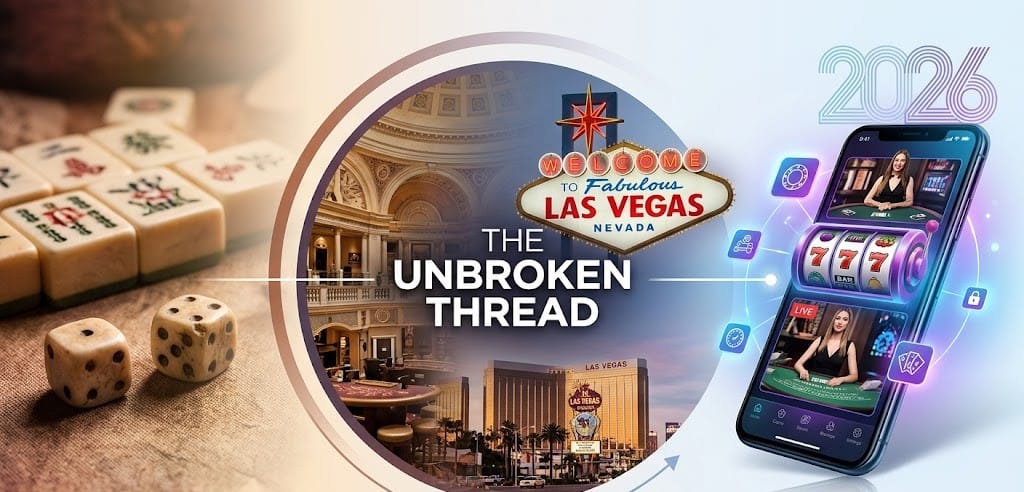
The Unbroken Thread
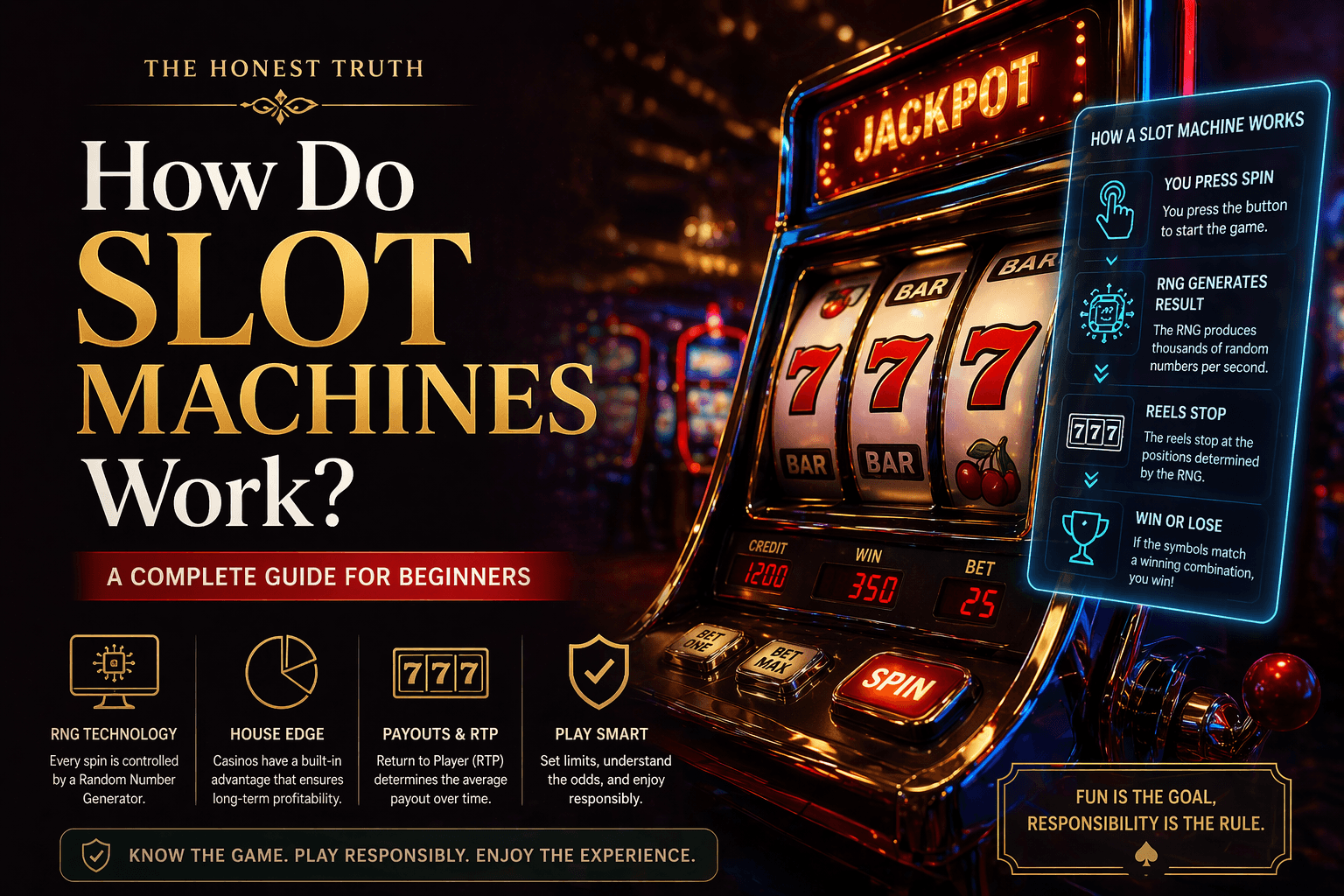
Four thousand years separate the bone dice of ancient Mesopotamia from the RNG-powered video slot on your phone. The technology is unrecognisable. The scale is incomprehensible. The geography is global.
And yet the human impulse at the centre of it all is completely unchanged.
The same thrill that drove a Roman soldier to cast dice against a fellow legionnaire in a Gaulish camp is what makes a player in Mumbai click “spin” at midnight. The uncertainty of the outcome. The possibility — however remote — of a life-changing reward. The communal ritual of competing against chance.
Gambling has survived the fall of empires, the condemnation of religions, the bans of governments, and the disruptions of technology. It has adapted to every era, absorbed every new platform, and found its way back to the mainstream in every generation.
Understanding where it came from doesn’t just satisfy historical curiosity. It explains why billions of people, across every culture and every age, have always found a way to place their bet.
Disclaimer: This article is intended for informational and educational purposes only. Online gambling laws vary by jurisdiction. In India, the legal status of online gambling varies by state. Please verify the regulations in your region before participating in any form of gambling. If you or someone you know is struggling with gambling-related issues, please seek professional support.